Hotel Revenue
7 Hidden Revenue Opportunities Most Hotels Overlook
· By Nokrach Gerard Trevor
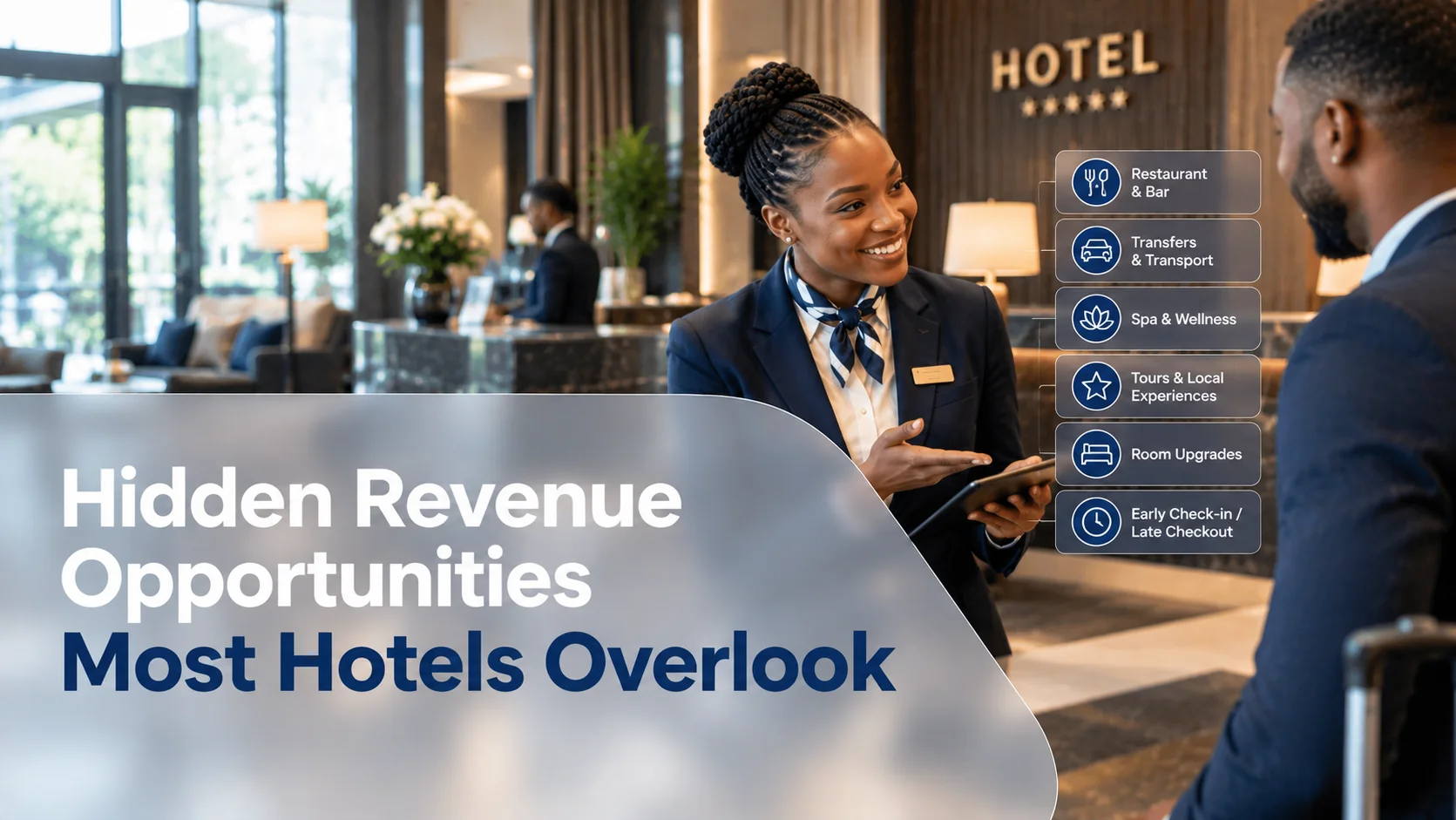
A hotel does not always need more bookings to find new revenue opportunities. Sometimes, the opportunities are already within the property: services guests do not know about, upgrades that are not consistently offered, enquiries that receive no follow-up, or accepted requests that are not properly tracked.
A hotel does not always need more bookings to find new revenue opportunities. Sometimes, the opportunities are already within the property: services guests do not know about, upgrades that are not consistently offered, enquiries that receive no follow-up, or accepted requests that are not properly tracked.
These opportunities can be easy to overlook because they do not always appear as obvious losses in a hotel's financial reports. A guest who never learns about the spa cannot book a treatment. A guest who asks about an airport transfer but receives no response may arrange transport elsewhere. A room upgrade that is never presented cannot become an additional sale.
These are examples of potential missed revenue, not proof that every hotel is losing money in these areas.
Understanding hotel ancillary revenue opportunities means examining the services a property already offers and identifying where awareness, communication, follow-up, fulfilment, or measurement could improve.
Here are seven areas hotel managers can investigate.
1. Guests do not know all the services available
The overlooked opportunity: Guests may be unaware of services they could purchase during their stay.
A hotel might offer restaurant dining, spa treatments, laundry, airport transfers, meeting facilities, or local experiences. However, these services do not automatically become visible to every guest.
Information may be spread across different places: the hotel's website, printed materials, reception, room directories, or individual staff members. Some guests may never encounter it, while others may discover a service only after they have already made alternative arrangements.
This creates an opportunity to improve service visibility.
Hotels should review how guests learn about available services at different stages of their journey:
Before arrival, through booking confirmation and pre-arrival communication.
During check-in, through reception information and relevant recommendations.
During the stay, through accessible service menus and appropriate guest communication.
Before departure, through relevant departure services or extension options.
For each service, make sure the description, price, availability, and booking instructions are clear.
What to investigate: Ask whether a guest can easily discover the hotel's main additional services without having to ask several employees.
2. Room upgrade opportunities are not presented consistently
The overlooked opportunity: Suitable guests may not be made aware of available room upgrades.
A hotel may have several room categories, but guests do not always know the differences between them. A guest who would appreciate a larger room, better view, or additional amenities may be willing to pay more if the value is explained clearly.
However, room upgrades require more than sending a promotional message. Hotels need to confirm inventory, pricing, room readiness, and the conditions attached to the offer.
A practical process should define:
Which room categories can be offered as upgrades.
When availability should be checked.
Which guests are eligible for an offer.
How the additional price is calculated and communicated.
Who confirms the upgrade in the hotel's reservation system.
For example, a guest booked into a standard room could be offered a larger room category at an additional cost, provided that the room is available and the price is approved.
What to investigate: Review how often eligible guests are informed about upgrade options and whether staff follow a consistent process for presenting and confirming them.
3. Dining and wellness services are under-promoted
The overlooked opportunity: Guests may be staying at a property without discovering its restaurant, spa, or other on-property services.
Hotels with dining and wellness facilities may have opportunities to generate additional sales from guests already on the premises. Yet these services can be overlooked when information is unclear, staff are occupied, or guests do not know how to make a reservation.
Consider a guest whose room rate does not include breakfast. If the hotel has an available breakfast service, a clear offer before arrival could help the guest decide whether to add it.
Similarly, a guest staying several nights might appreciate information about available spa appointments or a dining package.
The important factors are relevance and capacity. A hotel should not promote a dining package when the restaurant cannot accommodate additional guests or advertise a spa appointment that is already fully booked.
What to investigate:
Are guests informed about dining and wellness options?
Are prices and service details easy to understand?
Can guests make reservations conveniently?
Does the relevant department receive confirmed bookings?
Are unused appointment or dining capacities reviewed?
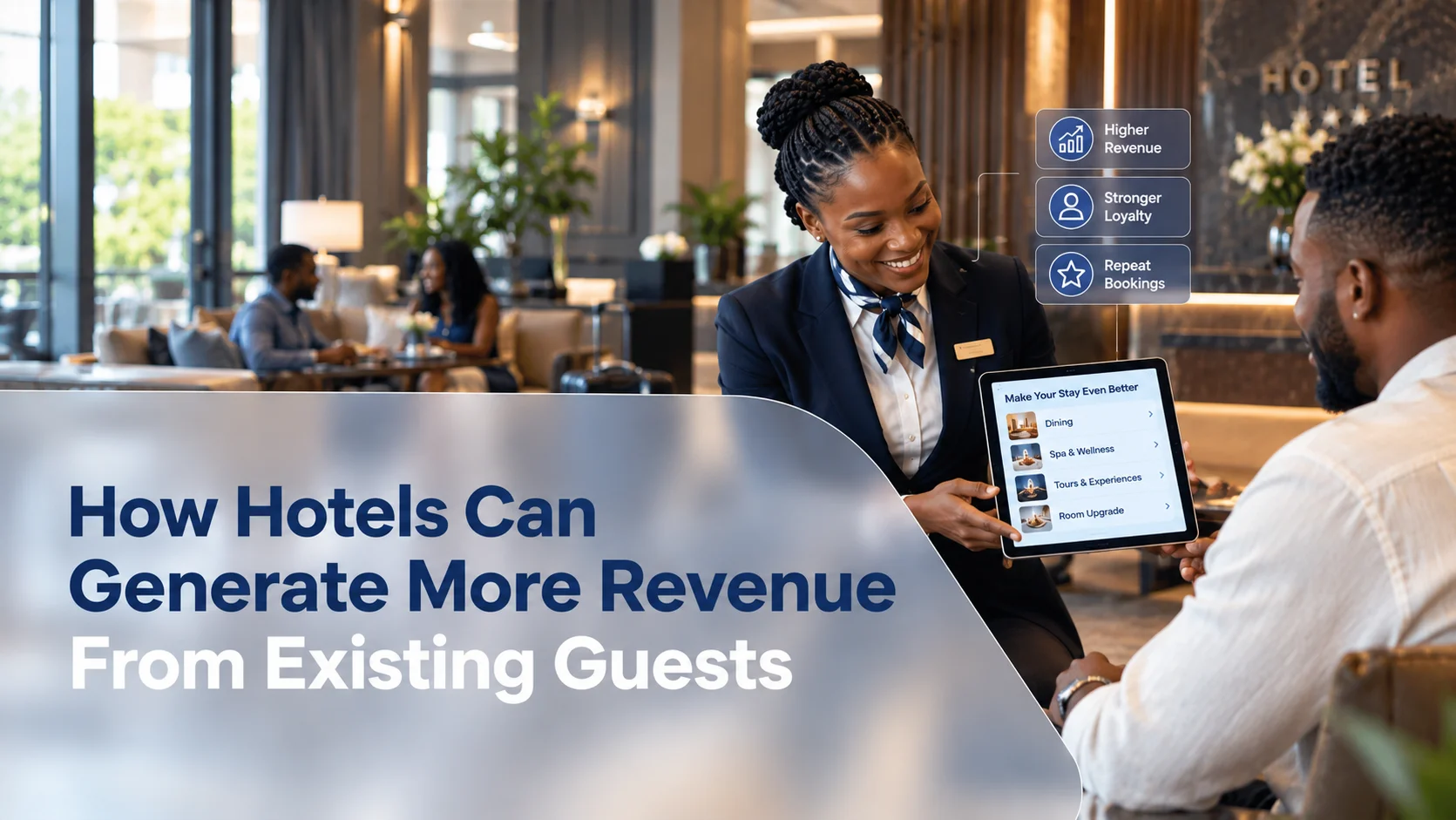
Hotels can also examine whether the timing of their offers matches the guest journey. Our guide to generating more revenue from existing hotel guests explains how service visibility and relevant communication fit into a broader revenue process.
4. Transfer and experience requests are not captured
The overlooked opportunity: Guests may need transport or local experiences, but the hotel may not have a reliable process for identifying and arranging those requests.
A guest arriving at an unfamiliar destination may need an airport transfer. Another may want to visit a local attraction or arrange a guided experience.
If the hotel provides these services directly or works with trusted partners, it may be able to help guests make arrangements while creating an additional revenue opportunity.
The difficulty is often coordination. Transport and experiences may involve external providers, schedules, prices, and confirmation processes. Without clear ownership, enquiries can be missed or left unresolved.
Hotels should establish:
Which transport and experience services they can arrange.
Whether services are provided directly or through partners.
Approved prices, commissions, or partner terms where applicable.
How availability is checked.
Who confirms the booking with the guest.
How cancellations and changes are handled.
For example, if a guest asks about an airport transfer, the hotel should have a clear way to provide the price, confirm the pickup details, and communicate the final arrangement.
What to investigate: Review guest enquiries about transport and local experiences. How many receive a complete response, and how many result in confirmed arrangements?
5. Interested guests are not followed up
The overlooked opportunity: A guest expresses interest in a service, but no one takes responsibility for the next step.
This is one of the most practical areas for hotels to examine.
A guest might ask about a room upgrade, request spa prices, or enquire about a dining reservation. An employee may intend to follow up but become busy with another task. The enquiry may also be passed to another department without a clear owner.
When this happens, the hotel may lose an opportunity even though the guest has already shown interest.
A reliable follow-up process should answer four questions:
Who is responsible? Assign each enquiry or accepted offer to the appropriate employee or department.
When should they respond? Define reasonable response times based on the service and guest journey.
What information is required? Make sure the responsible team has the guest's request, service details, and any relevant conditions.
How is the outcome recorded? Track whether the guest accepted, declined, requested more information, or did not respond.
Follow-up should be helpful rather than persistent. If a guest declines an offer or does not wish to receive further communication, the hotel should respect that decision.
What to investigate: Select a sample of recent service enquiries and trace what happened after the initial conversation. Identify where requests were delayed, forgotten, or left unresolved.
6. Campaigns are sent to broad, poorly defined audiences
The overlooked opportunity: Hotels may promote services to guests who are unlikely to need or value them.
Sending the same offer to every guest can create unnecessary communication and reduce the relevance of hotel promotions.
For example, a message about a long-stay package may not be useful to someone departing the next morning. A spa promotion may be irrelevant to a guest who has already checked out. An airport transfer offer may not be suitable for someone who has arranged their own transport.
Hotels can improve campaign relevance by defining audiences according to appropriate booking and stay information, expressed interests, or service requirements.
A targeted campaign might focus on:
Guests with room-only bookings who may want breakfast.
Guests arriving before the standard check-in time who may benefit from an early check-in option.
Guests staying several nights who may be interested in dining or wellness services.
Previous guests who may be suitable for an approved return-visit offer.
Individual upselling and group campaigns should also be treated differently. An individual offer responds to a particular guest's context or expressed interest. A campaign communicates a suitable promotion to a defined audience.
Both approaches require accurate information, appropriate contact rules, and a clear way for guests to respond.
What to investigate: Review recent campaigns. Were the recipients selected for a clear reason, and did the offer match their likely needs and the hotel's available services?
7. Management cannot attribute outcomes
The overlooked opportunity: The hotel cannot clearly identify which offers generated completed sales or where opportunities were lost.
A hotel might send hundreds of promotional messages and receive several enquiries. But without connecting those interactions to completed bookings, service delivery, and revenue records, management may not know whether the activity was commercially valuable.
For example, a guest may accept a dining offer, but if the restaurant sale is not connected to the original offer, the revenue impact may be difficult to assess.
The measurement process should distinguish between an accepted offer and a completed sale. A guest may express interest but later cancel, or an accepted service may not be delivered.
Where possible, connect the offer to the final transaction and record the relevant costs. This gives management a more realistic picture of the value created.
What to investigate: Can the hotel trace a service offer from the original communication through acceptance, fulfilment, and the resulting revenue record?
How to prioritize hotel revenue opportunities
Not every opportunity deserves immediate attention. Some services may have strong guest demand but limited capacity. Others may be easy to promote but difficult to measure or fulfil.
A useful starting point is to select opportunities that are relevant to guests, straightforward to deliver, and easy to measure.
For example, a hotel might begin with breakfast add-ons if the restaurant has available capacity, prices are clear, and the booking process is already established. A more complex experience involving several external partners may require additional preparation.
A practical prioritization checklist
Before testing an opportunity, confirm that:
The service is genuinely available at the property.
Its price and conditions are approved.
The intended guest audience is clear.
There is an appropriate time to present the offer.
Someone is responsible for responding to guest interest.
The fulfilment team understands the process.
The hotel can record the outcome and measure completed revenue.
This turns a list of possible revenue opportunities into a manageable improvement plan.
FAQs about hidden hotel revenue opportunities
How do hotels find missed revenue opportunities?
Hotels can review their existing services, guest enquiries, booking patterns, service usage, and follow-up processes. Look for services guests may not know about, offers that are not consistently presented, enquiries that receive no response, and sales that cannot be connected to their original offers.
What are hotel ancillary revenue opportunities?
Hotel ancillary revenue opportunities are potential ways to generate income from services beyond the core room booking. Depending on the property, these may include room upgrades, dining, spa treatments, transport, activities, meeting services, and other additional offerings.
Which hotel revenue opportunity should be tested first?
Start with a service that guests are likely to value, that the hotel can deliver reliably, and that has clear pricing and a measurable booking process. A small, controlled pilot is often more useful than promoting several untested services at once.
Does every hotel have the same hidden revenue opportunities?
No. Opportunities depend on the hotel's facilities, guest profile, location, service catalogue, operating capacity, and commercial arrangements. A property should assess its own services rather than assume that every opportunity applies universally.
Turn overlooked opportunities into a practical action plan
The seven areas in this guide provide a starting point for examining where a hotel may be missing additional sales. They are not proof of guaranteed revenue or evidence that every property has the same gaps.
The next step is to assess the hotel's existing services and identify where improvements would make the biggest practical difference.
Download the hotel revenue opportunity audit worksheet to review service visibility, upgrade processes, guest enquiries, follow-up, campaign relevance, fulfilment, and measurement.
HOSCover is designed to help hotels engage existing guests with relevant service offers and connect guest responses to operational follow-up and commercial activity. If your hotel wants to explore a more systematic approach.
The objective is not simply to promote more services. It is to make relevant services easier to discover, easier to purchase, and more reliably delivered.